

- October 7, 2026
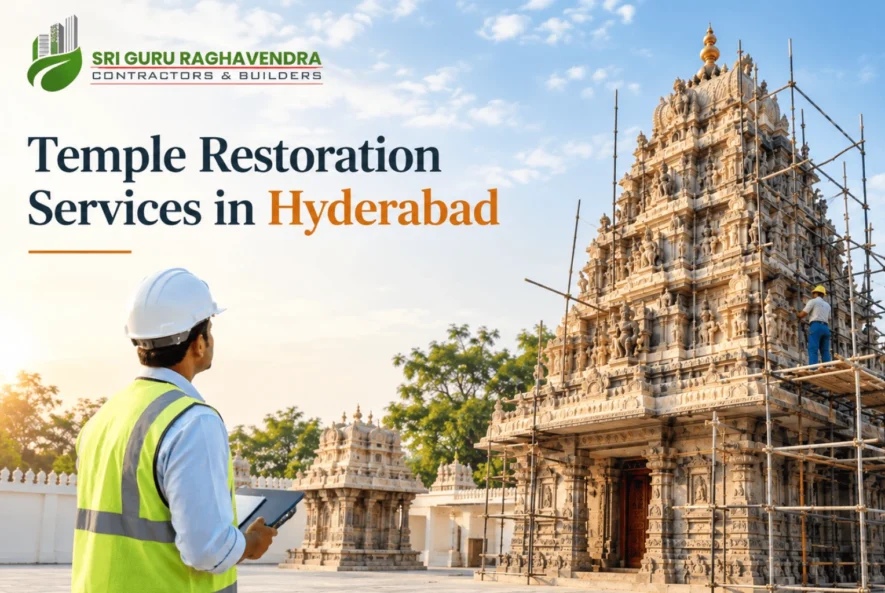
Temple Restoration Services in Hyderabad
Temples are more than buildings. They represent history, traditional architecture, craftsmanship, cultural identity, and generations of devotion. Over time, however, exposure to weather, moisture, ageing materials, cracks, settlement, poor drainage, and previous repair work can affect their appearance and structural condition.
Professional Temple Restoration Services in Hyderabad can help protect these valuable structures while preserving their architectural character.
Sri Guru Raghavendra Contractors and Builders provides specialized building restoration, structural repair, rehabilitation, strengthening, waterproofing, and renovation solutions for properties that require careful technical attention.
What Is Temple Restoration?
Temple restoration is the process of repairing, strengthening, preserving, and improving an existing temple while respecting its original architectural character.
Unlike ordinary building renovation, temple restoration may require greater attention to existing stonework, masonry, carvings, finishes, traditional details, structural elements, and moisture-related deterioration.
A proper restoration project should begin with understanding the existing condition of the structure rather than simply covering visible damage.
Why Temple Restoration Is Important
A temple that shows cracks, dampness, damaged masonry, leakage, or deteriorating surfaces may require timely inspection and repair.
Professional restoration can help address:
Early assessment can help prevent minor defects from becoming larger maintenance or structural problems.
Common Problems Found in Older Temples
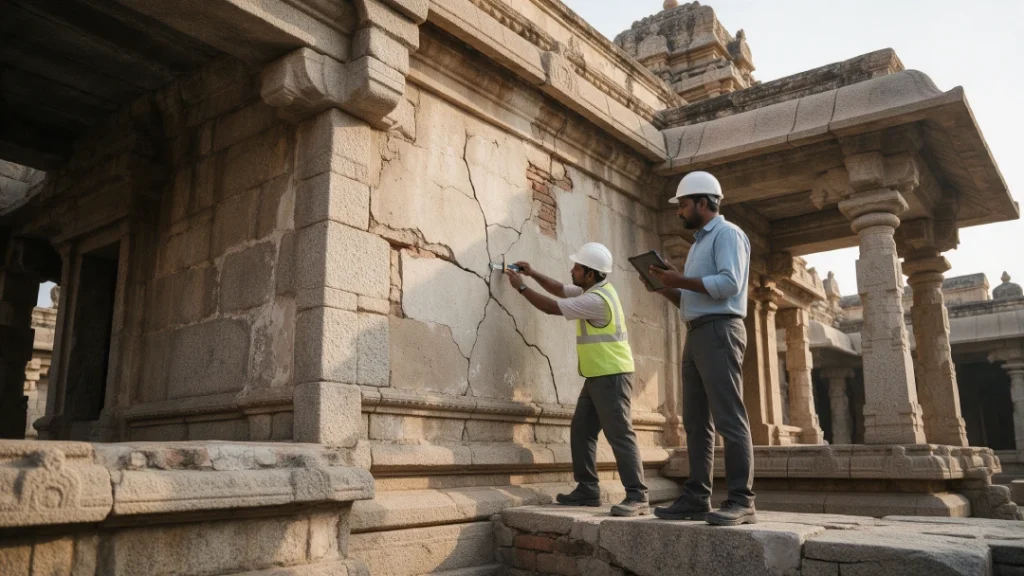
Older temple structures may experience different forms of deterioration depending on their age, materials, construction methods, environmental exposure, and maintenance history.
Structural Cracks
Cracks may appear in masonry walls, slabs, beams, columns, arches, or other structural areas. Their size, location, pattern, and movement should be assessed before selecting a repair method.
Water Leakage and Dampness
Water penetration through roofs, terraces, joints, walls, or poorly drained areas can contribute to dampness and material deterioration.
This makes temple waterproofing and leakage control an important part of many restoration projects.
Damaged Masonry and Stonework
Traditional masonry and stone elements can deteriorate due to prolonged moisture exposure, weathering, physical damage, or inappropriate previous repairs.
Surface and Plaster Deterioration
Old plaster, coatings, and finishes can crack, detach, or deteriorate over time. Repair work should be selected according to the existing surface and required finish.
Drainage Problems
Water accumulation around the temple complex can increase moisture-related issues. Proper drainage and water-flow management can therefore be an important part of restoration planning.
Our Temple Restoration Services in Hyderabad
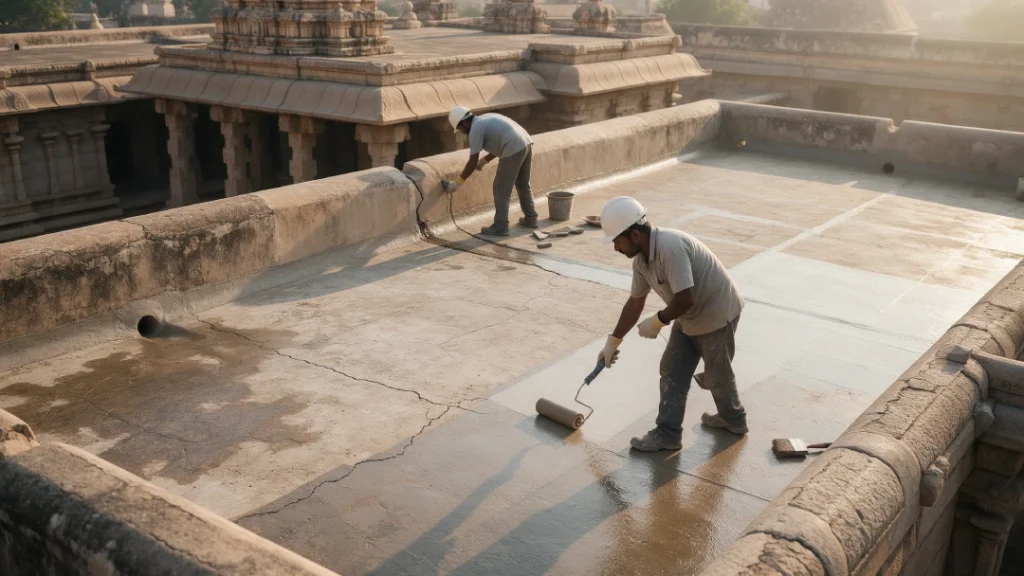
At Sri Guru Raghavendra Contractors and Builders, temple restoration can involve a combination of structural, waterproofing, repair, and building-maintenance solutions based on the site condition.
Temple Structural Repair
Damaged structural components should be examined before repair. Depending on the condition, suitable repair and strengthening methods can be planned to improve structural performance.
Structural Strengthening
Where an existing structure requires additional structural capacity or rehabilitation, appropriate strengthening techniques may be considered after technical assessment.
Heritage Structure Restoration
Restoration of older or heritage-style structures requires careful treatment of architectural elements while addressing deterioration and structural concerns.
Temple Roof Waterproofing
Roof and terrace leakage can affect ceilings, walls, masonry, and other components. Proper waterproofing and drainage solutions can help reduce water penetration and recurring leakage.
Crack Repair and Treatment
Cracks should be evaluated to understand whether they are surface-level, moisture-related, construction-related, or associated with structural movement before treatment.
Masonry and Surface Restoration
Damaged masonry, plaster, and other surfaces can be repaired using methods appropriate to the existing construction and restoration requirements.
Building Rehabilitation
Some temple complexes may require broader rehabilitation covering multiple building components rather than an isolated repair.
A Professional Approach to Temple Restoration
Every temple is different. The correct restoration solution depends on the structure’s existing condition, construction materials, damage pattern, usage, and restoration requirements.
A structured restoration process can include:
Initial Site Inspection
A detailed inspection is carried out to understand visible defects, structural concerns, moisture problems, leakage, cracks, and damaged areas.
Condition Assessment
The condition of major building elements is reviewed to determine which areas require repair, strengthening, waterproofing, or further technical investigation.
Restoration Planning
A practical restoration plan is prepared based on the site’s condition, project requirements, architectural considerations, and required repair methodology.
Structural Repair and Strengthening
Necessary structural repairs or strengthening works are carried out according to the approved repair approach.
Waterproofing and Moisture Control
Roof leakage, terrace leakage, dampness, drainage, and other water-related issues are addressed where required.
Architectural and Surface Restoration
Damaged surfaces and architectural elements are carefully restored according to the project’s requirements.
Quality Inspection
Completed restoration works should be reviewed to identify unfinished areas, defects, leakage points, or other issues requiring attention.
Temple Restoration vs Temple Renovation
A proper waterproofing project generally begins with a detailed inspection of the roof or terrace.
Site Inspection
The roof is inspected for cracks, damaged waterproofing, water stagnation, drainage problems, joints, and other possible leakage points.
Problem Identification
The likely source and extent of water penetration are assessed before selecting a treatment.
Surface Preparation
Loose material, dirt, damaged coatings, and other unsuitable surface conditions are addressed before waterproofing.
Crack and Joint Treatment
Relevant cracks, joints, corners, and vulnerable areas are repaired or treated using suitable methods.
Waterproofing Application
The selected waterproofing system is applied according to the roof condition and project requirements.
Inspection and Finishing
The completed work is checked carefully to ensure proper coverage and treatment of vulnerable areas.
Why Waterproofing Matters in Temple Restoration
Water is one of the major causes of building deterioration. Persistent moisture can affect walls, concrete, plaster, masonry, finishes, and other components.
A comprehensive restoration project may therefore need to examine:
Roof leakage
Terrace waterproofing
Wall dampness
Drainage
Construction joints
Cracks and water-entry points
Treating only the visible damp patch may not solve the underlying source. Identifying where water enters the building is an important step toward a more durable solution.
Why Choose Sri Guru Raghavendra Contractors and Builders?
Sri Guru Raghavendra Contractors and Builders offers building and structural solutions in Hyderabad with expertise across restoration, repair, strengthening, rehabilitation, waterproofing, and construction.
Our related services include:
- Temple & Heritage Structure Restoration
- Structural Rehabilitation
- Structural Strengthening
- Structural Retrofitting
- Structural Audit
- Building Health Assessment
- Crack Repair
- Waterproofing & Leakage Control
- Building Renovation
- Residential Construction
Our objective is to understand the actual condition of a building and implement practical solutions suited to its requirements.
Who Can Benefit from Temple Restoration Services?
Professional temple restoration services can be relevant for:
Temple Trusts
For maintenance, restoration, and structural improvement of temple properties.
Religious Institutions
For repair and rehabilitation of ageing buildings and associated structures.
Heritage Property Managers
For preservation of older architectural structures.
Community Organizations
For maintaining temples and historic religious buildings used by the local community.
Property Committees
For addressing recurring leakage, cracks, structural concerns, and deterioration.
When Should a Temple Be Inspected?
A professional inspection may be appropriate when you notice:
- New or expanding cracks
- Roof or terrace leakage
- Persistent dampness
- Damaged masonry
- Deteriorated plaster
- Water stagnation
- Visible concrete damage
- Loose or deteriorated building elements
- Repeated repair requirements
Regular assessment can help identify developing problems before extensive restoration becomes necessary.
Preserve the Structure. Protect the Legacy.
Temple restoration requires a balance between structural safety, building durability, architectural preservation, and careful workmanship.
Whether the requirement is structural repair, heritage restoration, crack treatment, waterproofing, rehabilitation, or broader building restoration, the work should begin with a clear understanding of the existing structure.
Sri Guru Raghavendra Contractors and Builders provides professional restoration and structural solutions in Hyderabad for buildings that require technical care and long-term protection.
Contact Sri Guru Raghavendra Contractors & Builders
Call Us: +91 9347532044 | +91 7791079999
Email: info@srigurus.com
Website: https://srigurus.com/